The concept of space industrialization is no longer confined to the realm of science fiction. With advancements in aerospace technology and growing interest from both government agencies and private enterprises, the idea of establishing manufacturing facilities in low Earth orbit (LEO) is gaining traction. This shift marks a pivotal moment in human history, as we transition from merely exploring space to actively utilizing it for industrial purposes. The potential benefits are immense, ranging from the production of advanced materials in microgravity to the assembly of large-scale structures that would be impossible to construct on Earth.
The driving forces behind this movement are multifaceted. On one hand, the decreasing cost of launching payloads into space, thanks to reusable rocket technology pioneered by companies like SpaceX, has made orbital manufacturing more economically viable. On the other hand, the unique conditions of microgravity and vacuum in space offer unparalleled opportunities for producing high-value materials such as ultra-pure semiconductors, fiber optics, and pharmaceuticals. These factors, combined with the increasing demand for satellite constellations and space infrastructure, create a compelling case for the industrialization of LEO.
One of the most promising aspects of orbital manufacturing is the ability to create materials with superior properties compared to those produced on Earth. In microgravity, the absence of sedimentation and convection allows for the production of more homogeneous alloys and crystals. This could revolutionize industries such as electronics, where the quality of materials directly impacts performance. For instance, ZBLAN fiber optics, which can theoretically transmit data with significantly less signal loss than traditional silica fibers, have been successfully produced in small quantities aboard the International Space Station. Scaling up such production in dedicated orbital factories could open new frontiers in telecommunications.
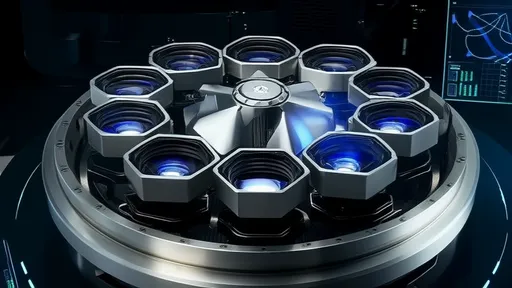
The architecture of these future orbital factories presents unique engineering challenges. Unlike terrestrial facilities, they must be designed to operate in the harsh environment of space while maintaining precise control over internal conditions. Modular designs that allow for gradual expansion and easy maintenance will likely dominate, as they offer flexibility and reduce the risk of catastrophic failure. Robotics will play a crucial role in assembly and operations, minimizing the need for human intervention in hazardous tasks. Some concepts envision self-assembling structures that can grow autonomously using raw materials harvested from asteroids or the Moon.
Environmental considerations are paramount in the development of space-based manufacturing. While moving industrial processes off Earth could theoretically reduce pollution on our planet, the proliferation of orbital facilities raises concerns about space debris and its long-term sustainability. Responsible operators will need to implement strict end-of-life protocols for their factories and develop technologies for active debris removal. The international community is already working on guidelines for sustainable space operations, but these frameworks will need to evolve rapidly to keep pace with industrial expansion in LEO.
The economic model for orbital manufacturing remains a subject of intense debate. Initial facilities will likely focus on high-value, low-volume products that justify the substantial transportation costs. As infrastructure in space grows and the cost of accessing orbit continues to decrease, a wider range of manufacturing activities may become feasible. Some analysts predict the emergence of a robust in-space economy where materials are sourced, processed, and assembled entirely off-world, with finished products either returned to Earth or used in space-based applications. This could fundamentally alter global supply chains and create entirely new industries.
Human factors cannot be overlooked in this equation. While automation will handle much of the production, certain processes may still require human oversight or intervention. This raises questions about the workforce needed to support orbital manufacturing – will specialists commute to space for short tours of duty, or will we see the development of permanent space-based communities? The psychological and physiological challenges of long-duration space habitation must be addressed, along with the legal and ethical implications of extending human industrial activity beyond our planet.
The geopolitical implications of space industrialization are profound. As nations and corporations vie for position in this new frontier, tensions may arise over orbital slots, resource rights, and technological dominance. International cooperation will be essential to prevent conflict and ensure equitable access to space resources. Some experts advocate for the creation of a new international body specifically tasked with governing space industrialization, similar to how the International Seabed Authority regulates deep-sea mining. Without such coordination, the commercialization of LEO could become a new arena for terrestrial rivalries.
Looking ahead, the timeline for establishing significant manufacturing capacity in space remains uncertain. While some prototype facilities could be operational within the next decade, full-scale industrialization may take several decades to materialize. The pace will depend on technological breakthroughs, market forces, and regulatory developments. What is clear is that the first companies to successfully establish orbital manufacturing capabilities will gain a significant competitive advantage, potentially reshaping entire industries on Earth and in space.
The transition to space-based industry represents more than just an economic opportunity. It signifies a fundamental shift in humanity's relationship with the cosmos – from explorers and observers to active participants in an interplanetary economy. As we stand on the brink of this new era, the decisions we make today about how to develop orbital manufacturing will echo through generations, shaping not just our industrial capacity, but our very future as a spacefaring civilization.

By /Aug 14, 2025

By /Aug 14, 2025

By /Aug 14, 2025

By /Aug 14, 2025

By /Aug 14, 2025

By /Aug 14, 2025

By /Aug 14, 2025

By /Aug 14, 2025

By /Aug 14, 2025

By /Aug 14, 2025
By /Aug 14, 2025

By /Aug 14, 2025

By /Aug 14, 2025

By /Aug 14, 2025
By /Aug 14, 2025

By /Aug 14, 2025

By /Aug 14, 2025

By /Aug 14, 2025

By /Aug 14, 2025

By /Aug 14, 2025
