The year 2045 looms on the horizon as a pivotal moment in human history—a threshold where science fiction may finally converge with scientific reality. Known as the "Singularity," this theoretical point marks the anticipated fusion of human intelligence with artificial intelligence, blurring the lines between biology and technology. The implications are staggering, promising to redefine what it means to be human while raising profound ethical, philosophical, and existential questions.
The Road to 2045: Exponential Growth and Converging Technologies
The concept of the Singularity isn’t new, but its plausibility has gained traction thanks to the exponential advancement of technology. Moore’s Law, which observed the doubling of computing power every two years, has held remarkably true for decades. But it’s not just computing power—breakthroughs in nanotechnology, biotechnology, neuroscience, and quantum computing are accelerating in tandem. By 2045, experts predict these fields will intersect in ways that enable seamless integration between human cognition and machine intelligence.
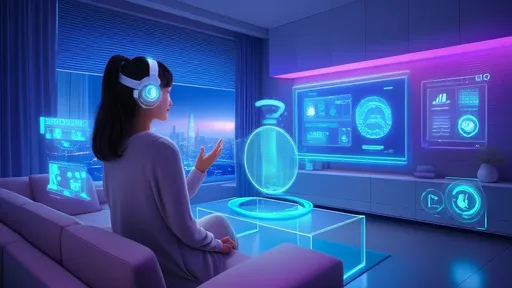
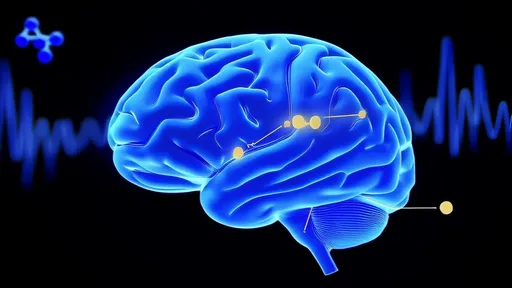
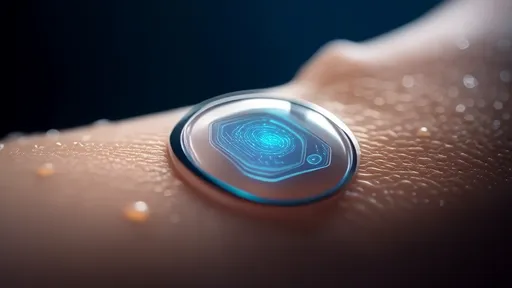
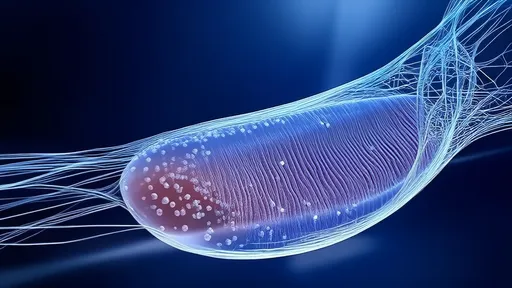
Neural interfaces, once the stuff of cyberpunk novels, are already making headway. Companies like Neuralink are developing brain-computer interfaces (BCIs) capable of translating neural activity into digital commands. Early applications focus on medical rehabilitation, such as restoring mobility to paralysis victims. However, the long-term vision is far more ambitious: bidirectional communication between the human brain and external AI systems. Imagine downloading skills directly into your cortex or accessing cloud-based knowledge in real time—capabilities that could become mainstream by mid-century.
The Human-Machine Hybrid: Evolution or Revolution?
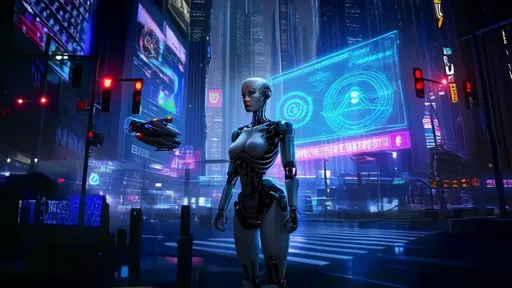
At the heart of the 2045 Singularity is the idea of transcending biological limitations. Aging, disease, and even death could become optional as nanobots repair cellular damage and AI-augmented brains achieve "digital immortality" by uploading consciousness into synthetic substrates. Proponents argue this isn’t just an upgrade—it’s the next step in human evolution. Critics, however, warn of a dystopian future where inequality escalates between enhanced post-humans and those who reject or can’t afford augmentation.
The ethical dilemmas are as complex as the science. If a person’s memories and personality can be digitized, does that constitute identity? Who owns the rights to uploaded consciousness? And how do we prevent malicious actors from hacking human minds? These questions lack easy answers, yet they demand urgent attention as the technology races ahead of regulatory frameworks.
Economic and Social Upheaval
The societal impact of human-machine fusion will be seismic. Labor markets, already disrupted by automation, could face further turbulence as augmented workers outperform biological ones. Education may shift from memorization to "brain optimization," while entertainment could evolve into fully immersive neural experiences. Governments might grapple with redefining citizenship for AI-enhanced individuals or even non-biological entities.
Meanwhile, the military applications are both tantalizing and terrifying. Super-soldiers with enhanced reflexes and networked cognition could render traditional warfare obsolete—or spark an arms race in cognitive weaponry. The same technologies promising to cure Alzheimer’s could also erase free will if weaponized.
Preparing for the Inevitable
Whether embraced or feared, the 2045 Singularity appears increasingly inevitable. Visionaries like Ray Kurzweil predict it will lead to a utopian era of limitless creativity and problem-solving, while skeptics echo Stephen Hawking’s warnings about uncontrolled AI surpassing human control. What’s clear is that humanity stands at a crossroads—one requiring interdisciplinary collaboration between scientists, ethicists, policymakers, and the public.
The countdown to 2045 isn’t just about technological readiness; it’s about philosophical preparedness. As we approach the fusion of mind and machine, we must ask not only "can we?" but "should we?"—and most importantly, "who do we become when we do?"

By /Aug 14, 2025
By /Aug 14, 2025
By /Aug 14, 2025
By /Aug 14, 2025
By /Aug 14, 2025
By /Aug 14, 2025
By /Aug 14, 2025
By /Aug 14, 2025
By /Aug 14, 2025
By /Aug 14, 2025
By /Aug 14, 2025
By /Aug 14, 2025
By /Aug 14, 2025
By /Aug 14, 2025
By /Aug 14, 2025
By /Aug 14, 2025
By /Aug 14, 2025

By /Aug 14, 2025
By /Aug 14, 2025
By /Aug 14, 2025
